Sleep is vital for good health. All kinds of things happen while you slumber, from memory consolidation to muscle repair. You might have heard of a “sleep score” and wondered what that means.
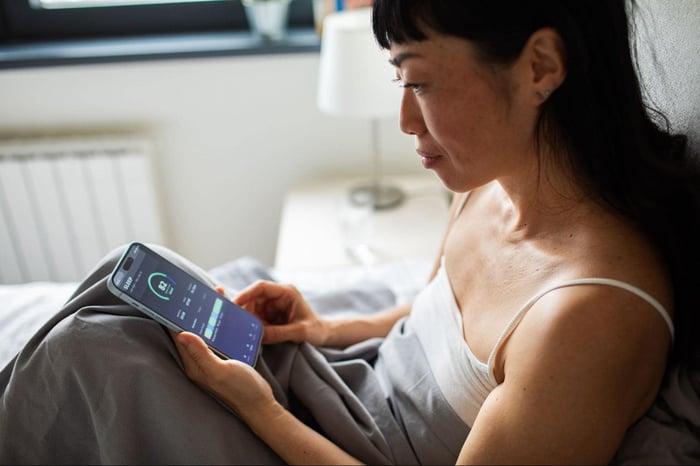
Your sleep score gives you a quick snapshot of how well you slept based on data collected by a wearable device or sleep-tracking app. Depending on the tracker, your score may reflect how many hours you slept, which sleep stages you entered, how many times you woke up, along with your heart rate, blood pressure, and other health stats.
Ahead, we’ll explore sleep scores in more detail along with factors that can disrupt your sleep, and we’ll look at how to sleep better at night with simple lifestyle changes, from cooling sheets to warm showers before bed.
What Is a Sleep Score?
A sleep score is a number, usually from 0 to 100, that gives you an overall picture of how well you slept the night before. Smartwatches, fitness trackers, smart rings, and sleep apps collect information while you sleep, then turn that data into an easy-to-read score.
There’s no universal formula for calculating a sleep score. Each device or app weighs your sleep data differently. Most look at factors such as:
- How long you slept
- How much time you spent in different sleep stages
- How often you woke up
- Your sleep schedule
- Changes in your heart rate
A higher score generally indicates better sleep. The score gives you a general picture of how well you’re sleeping at night and where you might need to make improvements.
The Factors Behind Your Number
Your sleep score combines several measurements to estimate how well you slept. The exact formula depends on your device, but your tracker may consider:
- Total sleep time: This is how many hours you actually slept. Most adults need about seven to nine hours each night.
- Deep and REM sleep: Your tracker estimates how much time you spent in these important stages of your sleep cycle.
- Sleep efficiency: This looks at how much of your time in bed you spent asleep, including how often you woke up during the night.
- Time to fall asleep: Your device may track how long it took you to go from awake to asleep after getting into bed.
- Restlessness: Frequent tossing, turning, or movement can signal that your sleep was disrupted, even when you don’t remember waking up.
- Resting heart rate: Some trackers measure your heart rate while you sleep and compare it with your normal patterns.
Together, these factors give your tracker a more complete picture of how well you slept and recovered overnight.
What Do Sleep Score Numbers Mean?
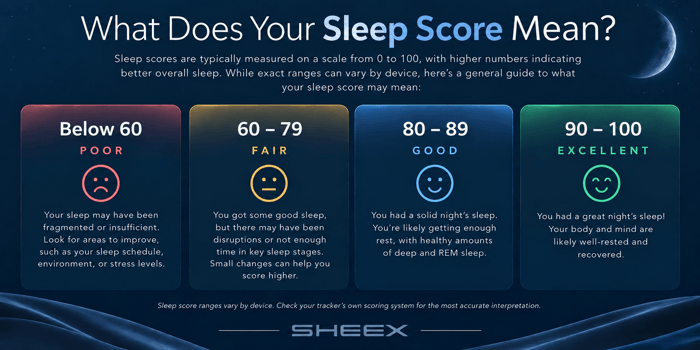
Most sleep scores use a scale from 0 to 100, with a higher number generally indicating better sleep. While every device calculates and categorizes sleep scores differently, here’s a general breakdown of what your sleep score may mean:
- Below 60 is Poor: Your sleep may have been too short or frequently disrupted. Consider factors such as your sleep schedule, bedroom environment, stress levels, or nighttime overheating.
- 60–79 is Fair: You got some quality sleep, but interruptions, insufficient sleep time, or other factors may have affected your rest.
- 80–89 is Good: Your sleep was generally restful, although there may still be room for improvement.
- 90–100 is Excellent: You likely had a great night of sleep with enough overall rest and fewer disruptions.
Keep in mind that there’s no universal sleep score scale. Fitbit, Oura, Garmin, Apple, and other sleep-tracking platforms may calculate and categorize sleep differently, so check your device’s scoring system for the most accurate interpretation.
Your sleep score is also more useful as a trend than as a judgment of a single night. Pay attention to how your score changes over time and whether certain habits or changes to your sleep environment consistently lead to better rest.
Sleep Stages and Why They Matter
You cycle through several stages of sleep throughout the night, with each full cycle lasting around 90 to 120 minutes.
Deep sleep and REM sleep both play important roles in a good night’s rest. During deep sleep, your body focuses on physical restoration and recovery. REM sleep is associated with dreaming, memory, learning, and emotional processing.
The amount of time you spend in each sleep stage varies throughout the night and can change with age and other factors. Rather than aiming for a specific percentage of deep or REM sleep, focus on getting enough total sleep and giving your body enough time to move through multiple complete sleep cycles. Most adults need 7-9 hours of sleep each night.
During a typical night, you may move through roughly 4-6 sleep cycles. If you’re spending 7-8 hours in bed but have a low sleep score and wake up feeling sluggish or groggy, you may be experiencing sleep interruptions that you’re not even aware of.
Simple Ways to Raise Your Sleep Score
It’s not always obvious what’s causing sleep disruptions, so you may need to adopt healthy lifestyle habits and see which ones improve your sleep. Here are some suggestions to get you started:
- Stick to a schedule: Go to bed and wake up around the same time every day.
- Keep your bedroom cool: Set your thermostat between 60°F and 67°F, a range most experts recommend for comfortable sleep.
- Limit late-night screens, caffeine, and alcohol: Put screens away before bed and avoid caffeine later in the day and alcohol at least 3 hours before bed.
- Create a wind-down routine: Give yourself time to relax with a book or another calming activity.
- Take a warm shower: A warm shower before bed helps your body cool down and prepare for sleep.
- Switch to cooling bedding: Choose breathable bedding that actively wicks heat and moisture away from your body to prevent nighttime overheating.
If you’ve done everything you can think of to improve your sleep and still aren’t seeing results, check with your doctor to see if medications or other factors may be interfering with your sleep.
Say Goodbye to Nighttime Overheating With SHEEX® Bedding
Night sweats and overheating are common causes of nighttime tossing and turning. If you wake up during the night feeling sweaty or overheated, your bedding could be to blame. SHEEX® performance bedding is specifically designed to keep you cooler with innovative fabrics.
Like the athletic wear top athletes use, SHEEX® fabrics actively wick heat and moisture away from your body through capillary action to keep you cool and dry as you slumber. That means less overheating and more restful nights of sleep. If you or your partner sleeps hot, SHEEX® cooling bedding can make a noticeable difference.
Start building your cooling sleep system with SHEEX® mattress toppers, temperature-regulating bed sheets, cooling pillows, cooling comforters, and performance sleepwear. Or opt for our exclusive bedding bundles for a complete bedding set.


FAQs
What is a good sleep score?
There’s no universal definition of a good sleep score because each sleep tracker uses its own formula and rating system. Generally, a score of 80 or above on a 100-point scale may indicate good sleep, while scores of 90 or above are often considered excellent. Always check the ranges provided by your specific device or app, and pay more attention to your sleep score trends over time than to a single night’s number.
How is a sleep score calculated?
Your sleep tracker combines several measurements to calculate your score. Depending on the device, these may include how long you slept, how much time you spent in different sleep stages, how often you woke up, how long it took you to fall asleep, and changes in your heart rate overnight.
Why is my sleep score so low even when I sleep enough?
Spending a full night in bed doesn’t always mean you slept well. Frequent awakenings, restlessness, too little deep or REM sleep, stress, alcohol, and overheating can all disrupt your sleep and contribute to a lower score.
Does bedroom temperature affect your sleep score?
The temperature of your sleep space and the quality of your bedding can absolutely affect your sleep score. If you get too hot, you may toss and turn or wake more frequently, which can interrupt your sleep cycles and reduce the amount of uninterrupted sleep you get. If you’re waking up hot or sweaty, switch to SHEEX® cooling bedding.
Are sleep trackers accurate for measuring sleep quality?
Consumer sleep trackers can help you identify patterns in your sleep, but they don’t measure sleep as precisely as a clinical sleep study. Instead of focusing too much on a single night’s score, look at your results over time to see how your sleep changes with your habits and environment.